Workers in grays ferry
Walking past banality
My plan was simple: walk down 20th until Washington Ave, then head to the Keith Herring mural on 22nd. I hadn’t been to Grays Ferry beyond an event I went to about three years back — I also thought it was a good introduction to photographing and expanding to more parts of Philadelphia.
Once I hit the memorial and took two photos I thought it would be a waste to go back and that, really, this wasn’t Grays Ferry. I should at least tread a bit further into the heart of this area. So, I did!
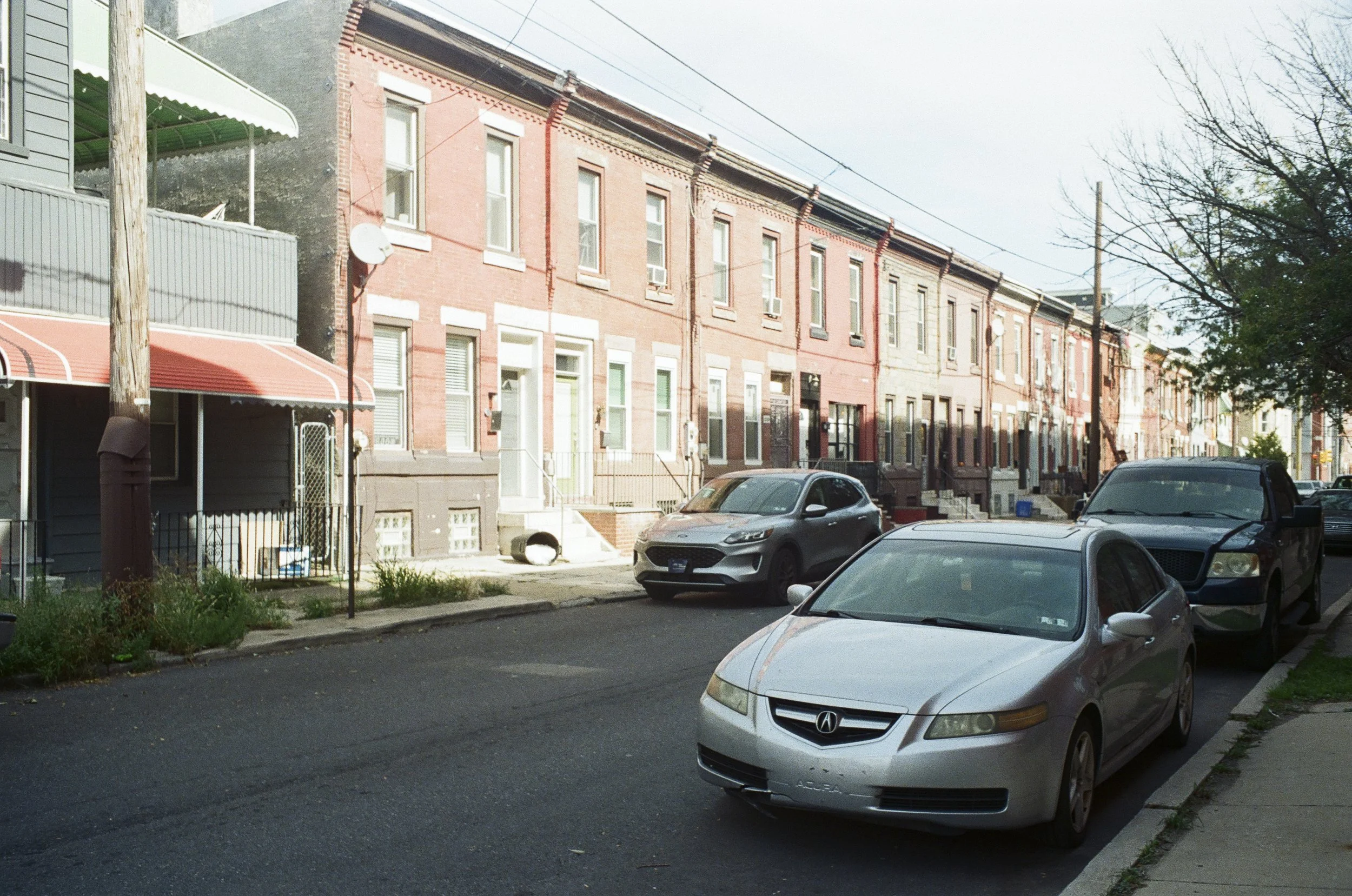
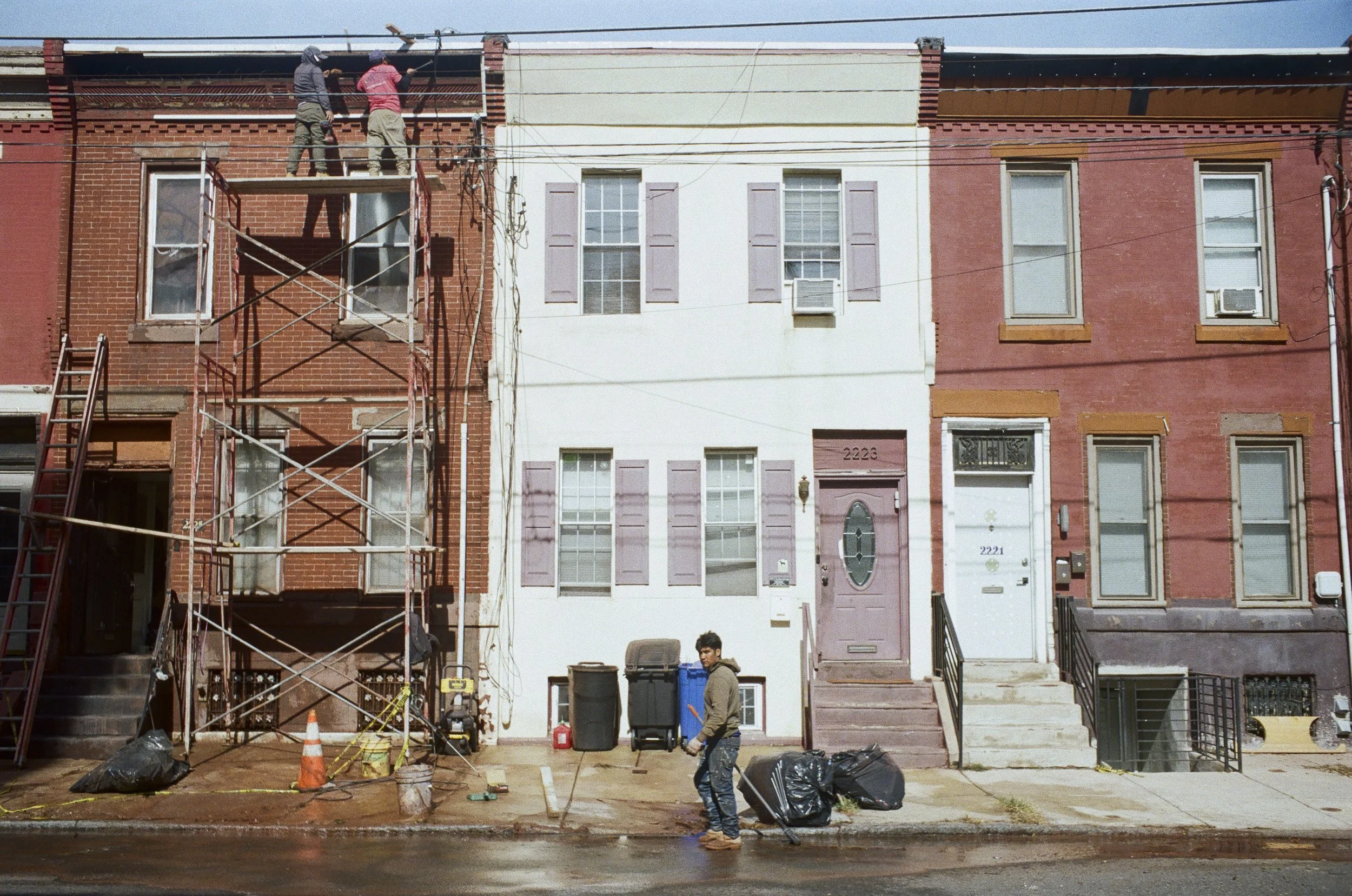
I continued down 22nd until I reached Dickinson and continued straight, through 25th, then ventured into the side streets. One of these streets was a flock of row homes bending around the corner. Potholes littered the street, water streamed from hoses, shadows danced from wires, trash bags waited to be picked up. About halfway through gazing at this block I saw some people painting one house. Their scaffolding took up the front, a ladder next to it. There was no door. A white row home was right next to it with dark purple details. On its side was a sort of pink-colored home.
Row homes are an essential part of Philadelphia. Driving down Broad Street you’ll see an endless amount of them; walking around Fairmount you’ll see a sea of them; North Philadelphia, Old City, Olney, Black Bottom, and South Philly the trend continues. Yet I hadn’t seemed to capture my essential Philadelphia row home shot — so the stakes were high.
I saw before me what I wanted to capture and I knew how to do it. I was using Ultramax 400 film and so relied on my preferred aperture of f/8 and shutter speed of 125. I held up my camera and felt a pang of protection between the workers and myself — the people who I saw through my lens weren’t real, just living images, mirages and illusions — and hesitated to take the shot. I felt my back tingle and my hair grow stiff and wondered if this shot was worth taking. Photographing people is not something I take lightly: when a person is prominently displayed, we tell their story for them. And so when the worker on the ground looked at me and my camera, I felt the story was being etched, and though I felt a type of shame and pervasiveness and fear that they may grow upset I clicked the shutter and took the shot and kept looking through the lens as if it were a shield that protected me from them.
Then, as I lowered the camera and saw him still staring at me, slowly walking towards the scaffolding, I smiled and gave him a thumbs up. He returned both. I walked away.